
Landlord Insurance
Protect Your Rental Property and Rental Income
What is Landlord Insurance and do you really need it?
Have you ever wondered what would happen if your rental property caught fire, was damaged by a storm, or a tenant accidentally caused thousands of dollars in damage?
Owning a rental property can be a great investment, but it also comes with risks. Unexpected events can lead to expensive repairs, legal claims, or even months without rental income.
This is where Landlord Insurance can help.
It protects your rental property, your income, and your financial future so you can invest in real estate with greater confidence.
What is Landlord Insurance?
Landlord Insurance is a type of property insurance designed specifically for people who rent out residential properties.
Unlike standard homeowners insurance, which is meant for owner occupied homes, Landlord Insurance protects properties that are rented to tenants.
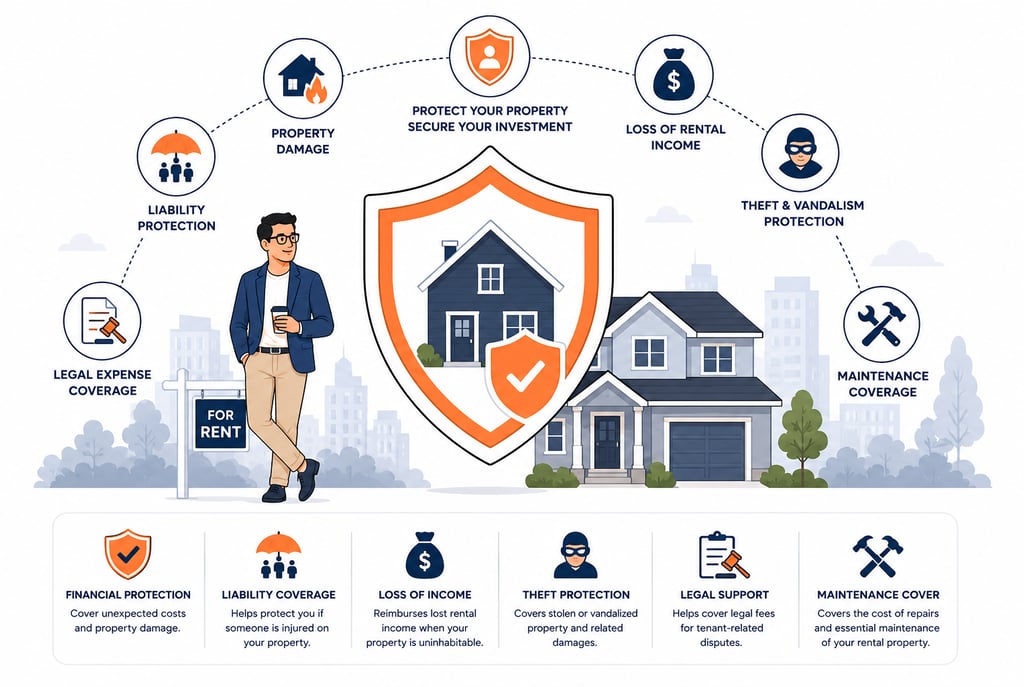
It can cover the building itself, liability claims, and, in many cases, lost rental income after a covered event.
Why is Landlord Insurance important?
Rental properties face risks that owner occupied homes do not.
Tenants may accidentally damage the property.
A severe storm could make the home uninhabitable.
A visitor could be injured on the property and file a lawsuit.
Without the right insurance, these events could result in significant financial losses.
Landlord Insurance helps protect your investment and allows you to recover more quickly after unexpected incidents.
Who should consider Landlord Insurance?
Landlord Insurance is suitable for:
Residential landlords
Property investors
Owners of single family rental homes
Owners of duplexes
Owners of apartment buildings
Vacation rental owners
Condo landlords
Individuals renting out inherited property
If you receive rental income from a property, Landlord Insurance is worth considering.
When should you buy Landlord Insurance?
The best time is before your first tenant moves in.
You should also review your coverage when you:
Purchase a rental property
Renovate a rental home
Increase the property's value
Change tenants
Convert your primary home into a rental property
Buy additional investment properties
Having coverage in place before problems occur provides the greatest protection.
Where does Landlord Insurance provide protection?
Coverage depends on your policy, but it commonly protects:
Rental houses
Apartments
Duplexes
Condominiums
Vacation rentals
Detached garages
Storage buildings
Other covered structures on the property
Coverage generally applies at the insured property location listed in your policy.
How does Landlord Insurance work?
You purchase a policy by paying a monthly or annual premium.
If a covered event damages your rental property or results in a liability claim, you notify your insurance company and submit a claim.
If approved, the insurer helps pay for eligible repair costs, legal expenses, or lost rental income according to your policy limits.
Every policy has exclusions, so it is important to understand what is and is not covered.
What does Landlord Insurance usually cover?
Coverage varies by insurer, but many policies include:
Damage to the rental building
Fire damage
Wind and hail damage
Storm damage
Lightning damage
Vandalism
Theft of landlord owned property
Detached structures
Personal liability
Legal defense costs
Medical payments to visitors
Loss of rental income after a covered event
Water damage from certain covered causes
Optional coverage may also be available for equipment breakdown, flood damage, earthquake damage, or landlord furnishings.
What is usually not covered?
Most Landlord Insurance policies do not cover:
Tenants' personal belongings
Normal wear and tear
Damage caused intentionally by the landlord
Flood damage unless separate flood insurance is purchased
Earthquake damage unless additional coverage is added
Routine maintenance issues
Pest infestations
Tenants should purchase Renters Insurance to protect their own belongings.
Benefits of Landlord Insurance
Having Landlord Insurance can help you:
Protect your real estate investment
Cover expensive repair costs
Replace lost rental income after covered damage
Reduce financial risks
Protect yourself against liability claims
Gain peace of mind as a property owner
Common mistakes people make
Many landlords assume homeowners insurance is enough.
Some common mistakes include:
Keeping homeowners insurance after renting out the property
Not updating coverage after renovations
Ignoring liability protection
Underestimating rebuilding costs
Forgetting about rental income protection
Assuming tenants' insurance protects the landlord
A fun insurance fact
Did you know that many first time landlords discover too late that their homeowners insurance may not fully protect a property once it is rented out?
That is why insurers offer dedicated Landlord Insurance policies that address the unique risks of rental properties.
Frequently Asked Questions
Is Landlord Insurance the same as Homeowners Insurance?
No. Homeowners Insurance is designed for homes you live in, while Landlord Insurance is specifically designed for rental properties.
Does Landlord Insurance cover tenant belongings?
No. Tenants should purchase their own Renters Insurance to protect their personal property.
Does it cover lost rental income?
Many policies include coverage for lost rental income if the property becomes uninhabitable because of a covered event.
Is Landlord Insurance required?
It is not usually required by law, but mortgage lenders may require it for financed rental properties, and it is strongly recommended for anyone renting out property.
Companies Offering Landlord Insurance
Several leading insurers offer Landlord Insurance in the United States:
State Farm Rental Property Insurance – Offers protection for rental homes, liability, and loss of rental income.
Allstate Landlord Insurance – Provides customizable coverage for landlords, including property damage and liability protection.
Liberty Mutual Landlord Insurance – Offers insurance solutions for rental property owners with optional additional coverage.
Farmers Rental Property Insurance – Provides coverage for residential rental properties, landlord liability, and property protection.
Final Thoughts
Owning rental property can be a rewarding investment, but it also comes with responsibilities and financial risks. A single fire, storm, or liability claim could result in significant expenses if you are not properly insured.
Landlord Insurance helps protect your property, your rental income, and your long term investment so you can focus on managing your property with confidence.
If you found this guide helpful, continue exploring Insuredpedia by reading our articles on Homeowners Insurance, Renters Insurance, Property Protection Insurance, Personal Liability Insurance, Flood Insurance, and Umbrella Insurance. Understanding these policies will help you build a complete insurance strategy for your real estate investments.