
Vision Insurance
Eye Care Coverage, Exams, Glasses and Contact Lenses
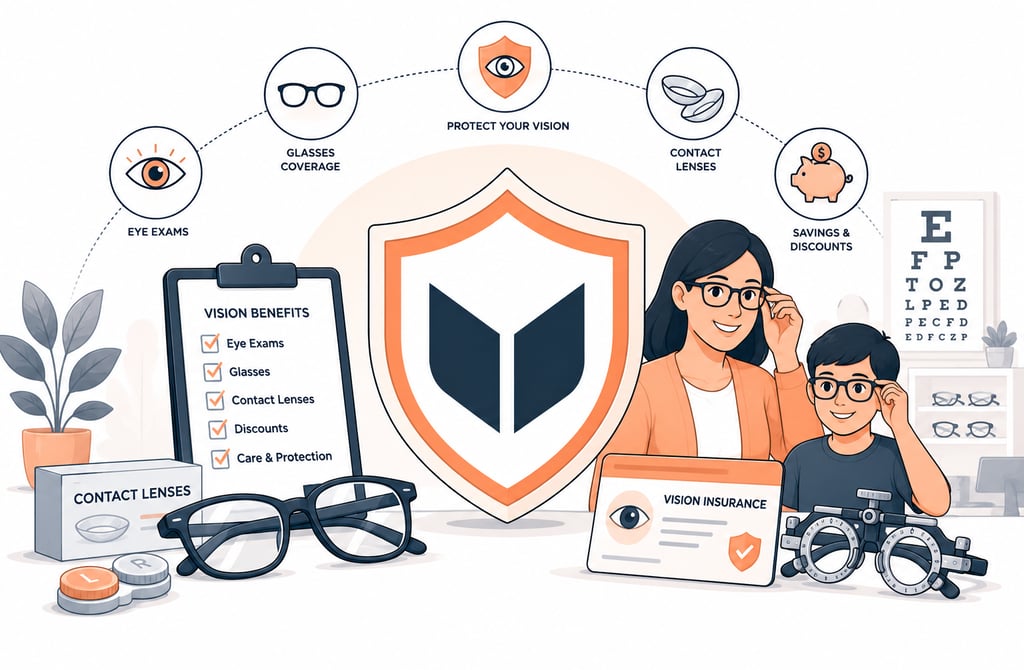
What is Vision Insurance and is it worth buying?
Have you ever gone for an eye exam and been surprised by the bill?
Or maybe you needed a new pair of glasses, only to find they cost much more than you expected.
Good eyesight is something many of us take for granted until our vision starts to change. Whether you spend long hours in front of a computer, drive every day, or simply want to keep your eyes healthy, regular eye care is important.
This is where Vision Insurance can help.
It helps reduce the cost of routine eye care, making it easier to afford eye exams, prescription glasses, contact lenses, and other vision services.
What is Vision Insurance?
Vision Insurance is a type of health insurance that helps pay for routine eye care and vision related expenses.
Unlike medical insurance, which mainly covers the treatment of eye diseases or injuries, Vision Insurance focuses on preventive eye care and correcting vision problems.
It is designed to make regular eye care more affordable.
Why is Vision Insurance important?
Your eyes can change gradually over time.
Without regular eye exams, you may not notice that your vision is getting worse. Eye exams can also detect early signs of health conditions such as diabetes, high blood pressure, and glaucoma.
Vision Insurance encourages preventive care by making routine checkups and corrective eyewear more affordable.
It helps you take care of your eyesight before small problems become bigger ones.
Who should consider Vision Insurance?
Vision Insurance can benefit almost everyone, especially:
Children
Adults who wear glasses
Contact lens users
Office workers
Students
Seniors
Drivers
People who use computers daily
Families with children
Anyone with a family history of vision problems
If you regularly need eye exams or prescription eyewear, Vision Insurance may help you save money.
When should you buy Vision Insurance?
The best time is before you need expensive eye care.
Many people buy Vision Insurance when:
Starting a new job
Having children
Wearing glasses for the first time
Switching to contact lenses
Experiencing changes in vision
Planning to replace glasses every year or two
Buying coverage before you need services helps you get the most value from your policy.
Where can you use Vision Insurance?
Most Vision Insurance plans work through a network of eye care providers, including:
Optometrists
Ophthalmologists
Optical stores
Vision clinics
Retail eyewear centers
Many plans also offer discounts when you use providers within their network.
How does Vision Insurance work?
You pay a monthly or annual premium for your coverage.
When you visit an approved eye care provider, your insurance helps pay for covered services.
Depending on your plan, you may receive:
A free or discounted annual eye exam
An allowance for prescription glasses
A discount on contact lenses
Savings on lens upgrades
Reduced prices for additional eyewear
Some plans require small copayments for certain services.
What does Vision Insurance usually cover?
Coverage varies by insurer, but many plans include:
Annual eye exams
Prescription glasses
Eyeglass frames
Prescription lenses
Contact lenses
Lens coatings
Progressive lenses
Scratch resistant coatings
Blue light filtering lenses
Discounts on LASIK surgery
Children's vision care
Follow up eye exams
Medical treatment for eye diseases is usually covered under your health insurance rather than your vision plan.
Benefits of Vision Insurance
Choosing Vision Insurance can help you:
Save money on eye exams
Reduce the cost of glasses
Lower the price of contact lenses
Detect eye problems early
Encourage regular preventive care
Improve your overall quality of life
Protect your family's eye health
Common mistakes people make
Many people believe they only need an eye exam when their vision becomes blurry.
Some common mistakes include:
Skipping regular eye exams
Assuming health insurance covers routine vision care
Ignoring changes in eyesight
Buying eyewear without comparing insurance benefits
Not using annual vision benefits before they expire
Choosing a plan without checking the provider network
A fun insurance fact
Did you know that your eyes are one of the few parts of your body where doctors can directly see blood vessels and nerves without surgery?
That is why a routine eye exam can sometimes reveal early signs of health conditions such as diabetes, high blood pressure, and high cholesterol before you notice any symptoms.
Frequently Asked Questions
Is Vision Insurance the same as Health Insurance?
No. Vision Insurance mainly covers routine eye care, while health insurance usually covers eye diseases, injuries, and medically necessary treatments.
Does Vision Insurance pay for glasses?
Most plans provide an allowance or discount for prescription glasses and lenses, although the amount varies by policy.
Can I use Vision Insurance for contact lenses?
Yes. Many Vision Insurance plans include coverage or discounts for contact lenses instead of glasses.
Is Vision Insurance worth it?
If you have regular eye exams, wear glasses, or use contact lenses, Vision Insurance can often save you money over time.
Companies Offering Vision Insurance
Several well known companies provide Vision Insurance plans in the United States:
VSP Vision Care – One of the largest vision insurance providers, offering coverage for eye exams, glasses, contact lenses, and lens enhancements.
EyeMed Vision Care – Offers nationwide vision plans with access to a large network of eye care professionals and retail eyewear stores.
UnitedHealthcare Vision – Provides vision insurance plans for individuals and families, including routine eye care and eyewear benefits.
Humana Vision Insurance – Offers affordable vision plans with coverage for exams, frames, lenses, and contact lenses.
Final Thoughts
Your eyesight affects almost every part of your daily life, from reading a book and driving safely to working on a computer and enjoying time with your family. Taking care of your vision today can help prevent bigger problems tomorrow.
Vision Insurance makes routine eye care more affordable and encourages regular checkups that keep your eyes healthy. Whether you already wear glasses or simply want to protect your eyesight, the right vision plan can be a smart investment.
If you found this guide helpful, continue exploring Insuredpedia by reading our articles on Health Insurance, Dental Insurance, Critical Illness Insurance, Long Term Care Insurance, Disability Insurance, and Medicare Insurance. Together, these guides will help you build a complete healthcare and financial protection plan for you and your family.